
The 2026 guide ranks ultrasonic units, bright-strobe lights, visual deterrents and scent formulations by field-tested effectiveness, safety and cost. Selection depends on species, roosting versus transient use, seasonal restrictions and legal protections. Practical inspection, sealing and humane exclusion remain first-line; repellents act as adjuncts. Ultrasonics suit flight corridor targeting, lights deter nocturnal roosts bat pest control, visuals offer low-risk disruption and scents give short-term displacement. The guide provides installation, monitoring and escalation criteria for informed, compliant action.

How to Decide Which Bat Repellent Fits Your Situation
When choosing a bat repellent, the decision should be guided by the specific context of infestation: species present, entry points, property type https://igreenasia.com/, and whether bats are roosting or merely passing through.
The assessor prioritizes known seasonal behavior to time interventions—maternity roosts in summer require exclusion delays, migratory visits demand transient deterrents.
Practical evaluation includes inspecting roof access and attic gaps, mapping flight paths, and identifying scent or acoustic attractants.
Legal and conservation constraints shape permissible options; humane exclusion and sealing are favored where colonies are protected.
Recommended actions proceed from least invasive: exclusion sealing, targeted deterrents, and habitat modification.
Decisions hinge on clear objectives: prevent reentry, protect occupants, or allow continued wild use at a safe distance.
Top-Rated Bat Repellents by Method (Ultrasonic, Lights, Visual, and Scent)
Four broad categories of bat repellents—ultrasonic devices, bright or strobe lighting, visual deterrents, and scent-based products—are commonly recommended based on field tests, manufacturer specifications, and wildlife control reports.
Ultrasonic options perform best when ultrasonic placement targets flight corridors and roost exits; specification sheets and independent trials guide frequency range and coverage.
Lighting solutions use continuous or strobe intensity to disrupt nocturnal activity while minimizing human impact.
Visual deterrents rely on motion, reflective surfaces, or predator silhouettes to create perceived risk without permanent habitat change.
Scent-based products emphasize proven compounds and proper application; scent longevity varies with formulation and environmental exposure, so reapplication schedules are essential.
Selection privileges methods that balance effectiveness, safety, and respect for animals’ natural behavior.
Side-by-Side Comparison: Effectiveness, Safety, and Cost for Each Product
Having outlined the main repellent types and their operational principles, the comparison now focuses on measurable effectiveness, documented safety, and total cost per treatment for representative products in each category.
Data-driven summaries show ultrasonic units offer variable efficacy in trials, low per-treatment cost but mixed longevity; visual deterrents score moderate effectiveness outdoors with minimal safety issues; bright-light fixtures deter roosting rapidly but raise energy and nuisance costs.
Scent-based formulations deliver short-term displacement, higher recurring expense, and stronger safety labeling.
The assessment highlights market trends favoring low-maintenance electronic devices and notes occasional legal disputes over efficacy claims.
Conclusions prioritize products that balance verified outcome metrics, conservative safety profiles, and transparent lifetime cost calculations for users seeking autonomy.
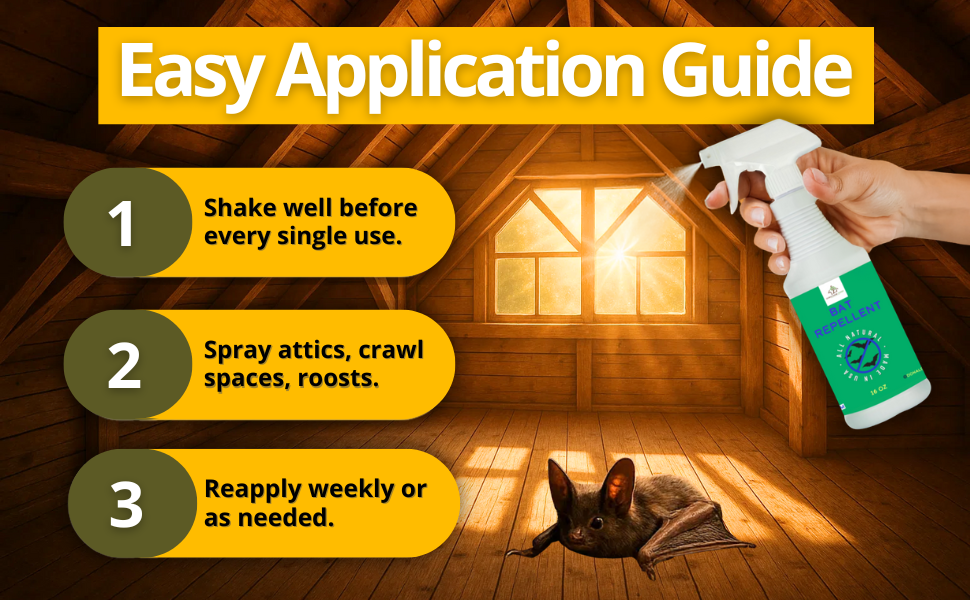
How to Install and Use Bat Repellents Without Harming Wildlife
Although care must be taken to respect bat biology and local regulations, installers should prioritize exclusion and deterrence methods that prevent harm while addressing roosting issues.
Practitioners should inspect entry points, seal gaps with one-way exclusion devices, and schedule work outside maternity and hibernation seasons to avoid trapping young or dormant bats.
Use humane exclusion strategies combined with targeted habitat modification—reduce outdoor lighting, remove attractants, and alter roost surfaces—to discourage return.
When repellents are applied, follow label instructions, use ultrasonic or chemical options only as adjuncts, and avoid broad pesticide use that harms non-target species.
Document actions, monitor results visually, and maintain structural repairs. If legal protections or complex colonies are present, consult wildlife authorities before proceeding.
Troubleshooting and Long-Term Follow-Up: When to Call a Pro
Effective exclusion and humane deterrence greatly reduce bat conflicts, but persistent or recurring signs indicate the need for professional intervention. A homeowner should document activity, perform ongoing monitoring, and escalate when gaps, re-entry, or health risks appear. If repellents fail after reasonable adjustments, call professional services skilled in exclusion, legal compliance, and safe removal.
- Repeated droppings or stains after exclusion attempts
- Audible roosting or wing noise inside walls or attic
- Structural gaps that are hard to access or seal safely
- Evidence of pups, which complicates humane exclusion timing
- Health concerns: bites, scratches, or possible rabies exposure
A concise plan: monitor, adjust deterrents, and engage experts when persistence threatens safety or freedom of the property.
Conclusion
The guide concludes that choosing a bat repellent depends on site specifics, goals, and safety priorities. Ultrasonic devices, lights, visual deterrents, and scent options each show variable effectiveness; evidence favors integrated, exclusion-focused approaches over single-method fixes. Installations must prioritize humane practices and non-target species protection. Monitor results, document activity, and adjust methods; professionals should be engaged for persistent infestations, structural exclusions, or where protected species are involved to make certain legal and effective resolution.